Choosing an Entry Door Material: Steel, Fibreglass, and Wood
A comparison of steel, fibreglass, and wood entry doors for Canadian homes, including durability, maintenance, insulation, and how to choose by exposure and budget.
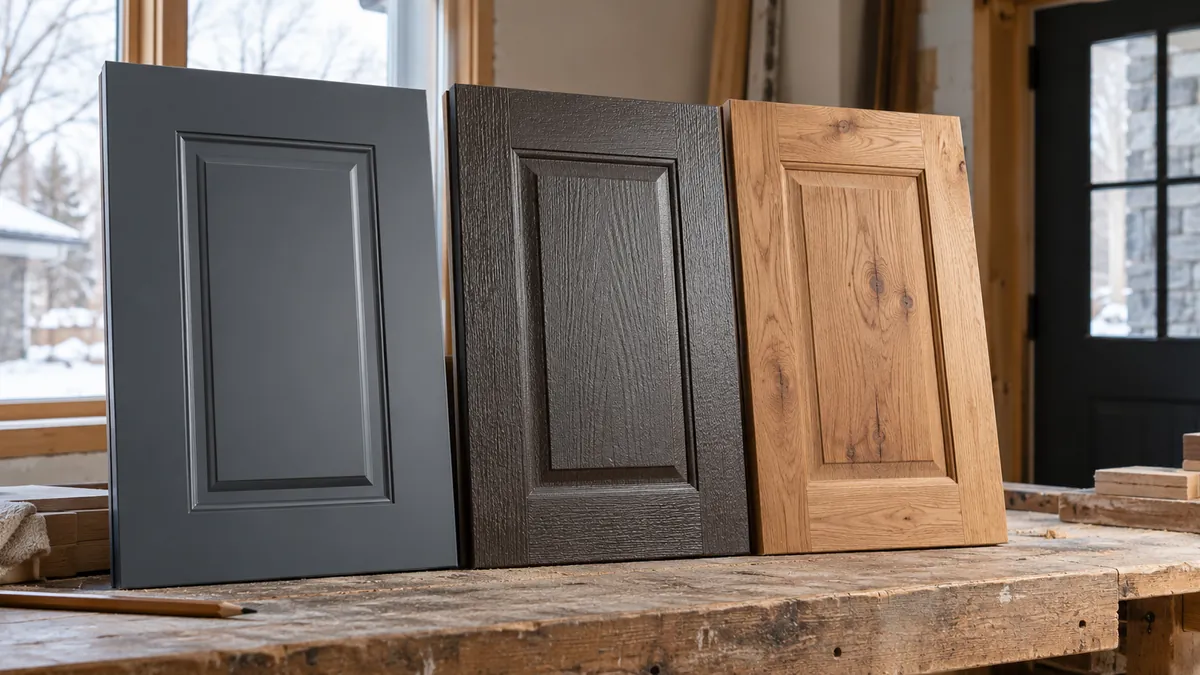
The entry door is the most used exterior door in most Canadian homes. It faces weather, provides security, and sets the tone for the house. Choosing the right material matters because the door must perform through humid summers, freezing winters, and everything in between.
Steel, fibreglass, and wood are the three main options. Each has strengths and weaknesses, and none is right for every situation. This guide compares them on durability, maintenance, insulation, security, and cost, with a focus on Canadian conditions. It is written to help you choose a door that suits your exposure, your budget, and how much upkeep you want to do.
Steel Entry Doors
Steel doors are strong, stable, and generally the most affordable exterior door option. Better units use a heavier gauge steel skin over an insulated core, with reinforced edges around the lock and hinge areas.
Advantages:
- Strong and resistant to forced entry when paired with a good frame and lock.
- Dimensionally stable; steel does not swell or shrink much with humidity.
- Usually the lowest upfront cost of the three materials.
- Available in many styles, colours, and glass options.
- Can be painted to match or refresh the appearance.
Considerations:
- Steel can dent from impact, and a dented panel is difficult to repair invisibly.
- If the coating is scratched and the steel is exposed, rust can form, especially in coastal or road-salt areas.
- Steel conducts heat and cold, so the frame and insulation quality matter for energy performance.
- A dent near the lock or hinge area can affect hardware alignment.
Steel is a practical choice for a front door that sees heavy use and where budget is a consideration. Address coating damage promptly to prevent rust.
Fibreglass Entry Doors
Fibreglass doors resist dents better than steel and can be manufactured with a wood-grain texture that mimics real wood. Quality varies widely based on skin thickness, core, and frame construction.
Advantages:
- Resists dents and dings better than steel.
- Does not rust or corrode.
- Stable in humidity; does not swell or shrink like wood.
- Can be painted or stained, depending on the product.
- Good insulation when the core is foam-filled.
Considerations:
- A thin skin over a hollow area can feel less solid than steel or wood.
- Quality varies widely; a cheap fibreglass door can feel flimsy and perform poorly.
- Colour can fade over years of sun exposure, especially on south-facing doors.
- Repair of deep damage is more difficult than on steel or wood.
Fibreglass is worth considering for an exposed entrance where dents and corrosion are concerns, provided you choose a well-built unit with a solid core and thick skin.
Wood Entry Doors
Wood doors offer a traditional look and can be repaired and refinished over decades. A well-built wood door performs well in a Canadian climate when it is kept dry and maintained.
Advantages:
- Classic appearance and the ability to match historic or custom homes.
- Can be repaired, sanded, and refinished rather than replaced.
- Solid wood provides good insulation and sound control.
- Can be custom-sized for unusual openings.
Considerations:
- Wood moves with humidity and temperature. It can swell in summer and shrink in winter, affecting fit and seals.
- Requires regular maintenance: sealing, painting, or staining to protect against moisture.
- Can rot if water gets in and stays, especially at the bottom edge.
- Generally the most expensive of the three materials.
- Heavier, which stresses hinges and hardware over time.
Wood is a good choice for a covered entrance or a home where appearance and longevity matter, and where you are willing to maintain the finish. It is less suited to an exposed, weather-lashed opening without diligent upkeep.
Material Comparison
| Factor | Steel | Fibreglass | Wood |
|---|---|---|---|
| Upfront cost | Lowest | Moderate | Highest |
| Dent resistance | Low | High | Moderate |
| Corrosion resistance | Moderate | High | Not applicable |
| Dimensional stability | High | High | Moderate |
| Maintenance needed | Low | Low | High |
| Repairability | Moderate | Low | High |
| Typical service life | 15 to 30 years | 20 to 30+ years | 30 to 50+ years with care |
| Best for | Budget, heavy use | Exposed entries, low maintenance | Covered entries, character homes |
Insulation and Core
The face material matters less than the core for energy performance. A hollow door of any material offers limited insulation and sound control. Look for:
- A foam-filled or insulated core.
- A thermal break between the exterior and interior surfaces.
- Good weatherstripping and a quality threshold.
- A frame that matches the door and seals well.
A premium steel or fibreglass door with an insulated core usually outperforms a thin wood door with poor seals. The core, not the skin, determines much of the comfort benefit.
Security by Material
All three materials can be secure when properly installed with good hardware, but there are differences:
- Steel is inherently strong and resistant to kicking or prying when the frame and lock are sound.
- Fibreglass can be secure, but a thin skin over a hollow core is easier to compromise than solid steel or wood.
- Wood is secure when solid and well-maintained, but rot or cracks around the lock area weaken it.
Glass is part of security too. A door with a large glass panel can be a point of entry regardless of the slab material. Laminated glass or security film adds protection.
Exposure and Placement
Where the door sits on your house should influence the material:
- Exposed front door facing wind and rain: Steel or high-quality fibreglass with good weatherstripping.
- Covered porch or entry: Any material works; wood is viable here.
- South-facing with strong sun: Fibreglass or wood; steel can absorb heat and the finish may fade.
- Coastal with salt air: Fibreglass or well-coated steel; wood needs vigilant maintenance.
- High-traffic family entrance: Steel or fibreglass for dent resistance.
- Character or heritage home: Wood to match the original style.
Maintenance Expectations
- Steel: Wash occasionally. Touch up scratches promptly to prevent rust. Repaint if the finish fades or chips.
- Fibreglass: Wash occasionally. Touch up chips in the finish. Repaint or reseal as the manufacturer recommends.
- Wood: Inspect the finish annually. Re-seal or repaint as needed, especially on bottom edges and end grain. Address any soft spots immediately.
Neglecting wood maintenance is the fastest way to shorten its life. Steel and fibreglass are forgiving, but they still benefit from regular cleaning and seal checks.
Cost Over Time
Beyond the material itself, the door replacement cost guide explains how the frame, glazing and installation affect the overall estimate.
Steel has the lowest upfront cost but may need replacement sooner if dented or corroded. Fibreglass sits in the middle on price and upkeep. Wood costs the most initially but can last the longest with care, and refinishing is cheaper than replacing.
Think in terms of cost over twenty years, not just the price on the quote. A well-maintained wood door can outlast two steel doors, but only if the finish is kept up.
Frequently Asked Questions
Can I paint a fibreglass door?
Many fibreglass doors can be painted, but check the manufacturer's recommendations. Some finishes are not designed to take paint well.
Does a steel door rust?
Only if the coating is damaged and the steel is exposed to moisture. Touch up scratches promptly, especially near the bottom and around hardware.
Is a wood door too much maintenance for Canada?
Not if the entrance is covered and you are willing to re-seal or repaint every few years. An exposed wood door without maintenance will not last.
Which material is most energy efficient?
All three can be efficient with an insulated core and good installation. The frame, glass, and weatherstripping matter as much as the slab material.
Can I replace just the door slab and keep the frame?
Yes, if the frame is sound, square, and in good condition. If the frame is rotted or out of square, replace it with the door.
How do I know if my door frame is sound?
Check for soft wood, cracks at the corners, separation from the wall, and water staining. Press gently with a screwdriver handle; soft or spongy wood indicates rot.
Door Cost Expectations
Treat any figure you see online as a planning range rather than a quote. The actual price depends on the material, core, glass, hardware, and whether the frame is replaced.
As a general planning guide:
- Steel entry door: usually the lowest upfront cost of the three materials.
- Fibreglass entry door: a moderate cost, with quality varying widely by skin thickness and core.
- Wood entry door: generally the highest upfront cost, but can last the longest with care.
- Glass inserts and sidelights: add cost and can change the installation scope.
- Frame replacement: adds cost if the existing frame is rotted or out of square.
- Hardware and locks: vary widely, especially for smart locks or multi-point systems.
Ask for a written quote that separates the slab, frame, glass, hardware, trim, disposal, and labour. A single lump sum makes it hard to compare materials fairly.
Working With Your Contractor on Door Material
A good contractor will:
- Inspect the frame before recommending a material, because a sound frame affects which door will install well.
- Match the material to your exposure, such as coastal salt, driving rain, or strong sun.
- Explain the core quality, not just the face material.
- Confirm whether the existing frame is sound enough to keep.
- Provide written warranty details for both the product and the installation.
If a contractor pushes one material without asking about your exposure, budget, or maintenance willingness, get a second opinion.
Door Material Quick Reference
- Steel: strongest and most affordable, but can dent and needs coating touch-ups.
- Fibreglass: resists dents and corrosion, but quality varies by skin and core.
- Wood: traditional and refinishable, but needs regular sealing and maintenance.
- Match the material to your exposure: coastal salt, driving rain, or strong sun.
- The insulated core matters more than the face material for energy performance.
- Inspect the frame before deciding; a sound frame can keep, a rotted one needs replacement.
- Think in cost over twenty years, not just the upfront price.
Which material resists dents best?
Fibreglass resists dents better than steel. Steel can dent from impact, and a dented panel is difficult to repair invisibly.
Can I change door material without changing the frame?
Yes, if the frame is sound, square, and in good condition. If the frame is rotted or out of square, replace it with the door.
Which material resists dents best?
Fibreglass resists dents better than steel. Steel can dent from impact, and a dented panel is difficult to repair invisibly.
Next Steps
Choosing an entry door material is the first step. The installation, threshold, hardware, and sealing determine how well it performs. Windoorly can help you compare options and plan an installation that suits your exposure and budget.