Window Won't Open, Close or Lock: What to Check
A stuck, misaligned or unsecured window is often repairable. Work through these checks by window type before forcing the sash or booking a replacement.
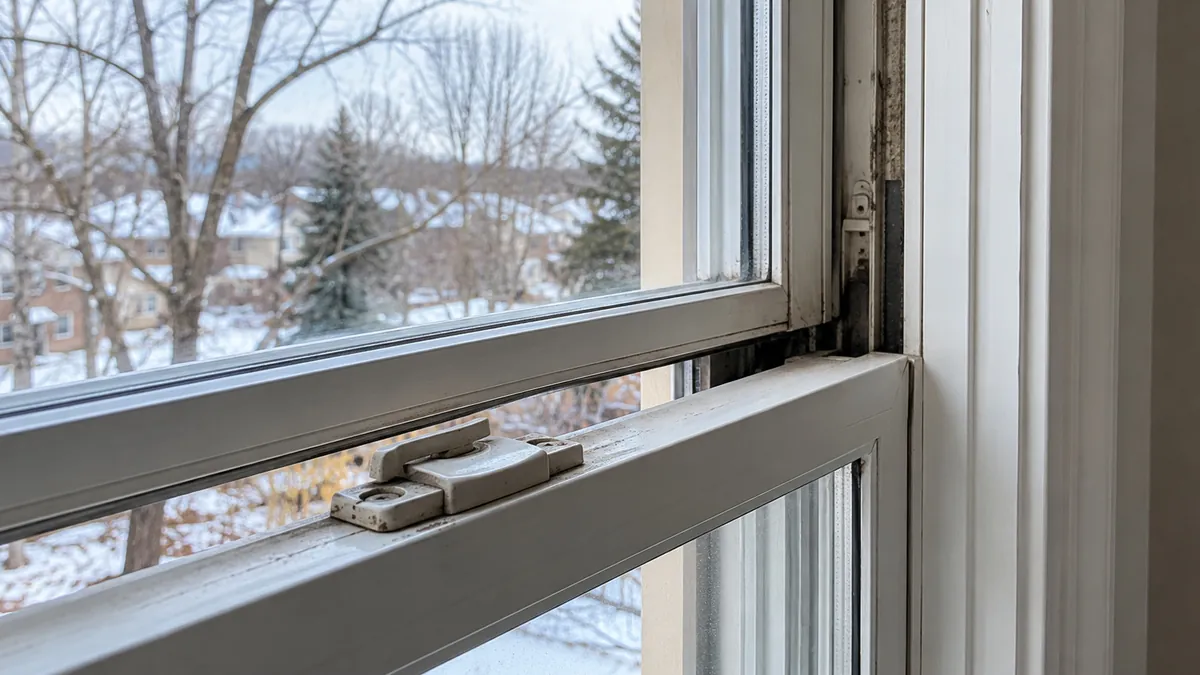
A window that will not open, close or lock is more than an inconvenience. It can affect ventilation, security and, in some cases, safe escape. The right first step is to identify whether the problem is debris, alignment, hardware or structural damage. Forcing the sash can turn a small repair into a larger one.
This guide covers the checks to try by window type and the signs that you should call a professional. It also explains what to photograph, what to ask a contractor and when repair is a better choice than replacement.
Before You Start
- Do not force a crank, handle or sash if it will not move with gentle pressure.
- Keep children and pets away from a window that could fall or fail.
- Do not remove safety hardware unless you know how it is reinstalled.
- If the window is an emergency exit, keep the opening clear and have the repair assessed promptly.
- If you see broken glass, a loose sash or water damage, stop and arrange an inspection.
A stuck window is often a sign that something is out of alignment. Gentle pressure may free a minor bind, but heavy force can crack glass, bend a frame or damage hardware beyond a simple repair.
Start With the Basics
Before you assume the worst, check the simple things:
- Is the window actually unlocked?
- Is a child safety latch or secondary lock engaged?
- Is a curtain, blind or furniture item blocking the sash?
- Is there debris, ice or snow in the track?
- Has the window been closed too tightly by a previous user?
- Is the window on a tilt or cleaning setting?
Some windows have a sash that must be returned to a specific position before the lock will engage. Others have a tilt latch that looks closed but is not fully seated. A quick check can save a service call.
Slider Windows and Patio Doors
Sliders usually fail because of the track, rollers or alignment.
Try these checks:
- Look for grit, hair, pet fur or hardened debris in the track.
- Vacuum the track and wipe it with a damp cloth.
- Check that the sash is sitting in the track correctly.
- Look for a damaged roller or a track that has lifted.
- Test the lock with the sash pulled fully into position.
Do not lubricate a track with a product that attracts dirt unless the manufacturer recommends it. If the sash still drags after cleaning, the rollers or alignment may need adjustment.
A slider that is hard to move but still locks may only need a clean track and a roller adjustment. A slider that will not lock may have dropped, worn rollers or a damaged keeper. Those are different repairs, and the diagnosis matters.
Casement and Awning Windows
These windows use a crank or operator and hinges. Common problems include:
- A crank that turns but does not move the sash.
- A sash that binds at one corner.
- Worn or broken hinges.
- Debris or hardened material in the hinge area.
- A handle that will not release the lock.
Check that the window is unlocked and that the crank is fully engaged. Look for obstructions at the hinges. If the crank feels loose or the sash moves unevenly, stop using it until the operator is inspected. Continuing to force it can damage the hinge or the frame.
Casement and awning windows also have a friction or opening limit that can wear. If the sash no longer stays where you put it, the operator or hinge may need attention even if the window still opens.
Double-Hung and Single-Hung Windows
These windows can stick because of a swollen frame, a broken balance or a sash that has moved out of alignment.
Check:
- Whether both sashes are unlocked.
- Whether the sash is stuck to the frame along its edge.
- Whether the sash tilts or binds on one side.
- Whether the balance cords or springs are visible and intact.
- Whether the window has swollen from moisture.
A sash that is stuck may need careful release. Do not use a metal tool that can damage the frame or glass. If the sash is loose or the balance is broken, the window may be unsafe to operate until repaired.
Locks and Handles
A window that closes but will not lock often has a misalignment problem rather than a broken lock.
Check:
- Whether the sash is fully closed and seated.
- Whether the lock keeper is loose or moved.
- Whether the handle turns freely.
- Whether debris is blocking the lock.
- Whether the window has dropped on one side.
A lock that does not engage should not be left as-is, especially on a ground-floor or accessible window. A temporary secondary lock may help, but the underlying alignment should be repaired.
Security and Accessibility
A window that will not lock is a security issue, not just a maintenance item.
- Ground-floor and basement windows are the most accessible and deserve prompt attention.
- A window left unlocked can be a simple entry point.
- A window that closes but does not latch may look secure from a distance.
- A secondary lock can be a short-term measure, but it is not a substitute for a working primary lock.
- Check that the lock still works after any repair, not just that the window closes.
If a window cannot be secured, consider temporary measures while you wait for the repair, such as a window bar or a secondary latch suited to the window type. Do not block an emergency escape window in a way that cannot be released from inside.
When It Is a Frame Problem
Some symptoms point beyond hardware:
- A visible gap that changes with the season.
- Cracks at the frame corners.
- Soft or stained wood around the sill.
- A sash that has dropped and no longer meets the frame evenly.
- Water entering around the window.
- A window that has become difficult to operate after a renovation or settling.
These may require frame repair, re-glazing or replacement. A window that is out of square may not hold a new lock or seal correctly.
Window Type and Common Failure Points
| Window type | Typical problem | First check |
|---|---|---|
| Slider | Drags, will not lock | Track, rollers, sash seating |
| Casement | Crank turns but sash does not move | Operator, hinge, obstruction |
| Awning | Binds at one corner | Hinge, operator, frame square |
| Double-hung | Sash sticks or drops | Balance, sash alignment, swelling |
| Bay or bow | Section will not close or seal | Joints, frame movement, hardware |
| Fixed | No operation, but leaks or fogs | Seal, glazing, frame |
Knowing the type helps you describe the problem and helps the contractor bring the right parts.
What Not to Do
- Do not pry a stuck sash with a screwdriver or crowbar.
- Do not remove hinges or balances without support for the sash.
- Do not drill new lock holes without checking alignment.
- Do not cover weatherstripping, tracks or lock parts with finish.
- Do not ignore a window that will not lock on an accessible floor.
- Do not use excessive force on a crank or handle.
- Do not leave a sash open if it could fall or be damaged by wind.
A small amount of patience and the right repair is usually cheaper than replacing damaged glass or a bent frame.
Temporary Measures
While you wait for a repair, a few temporary steps can reduce risk:
- Keep the window closed and secured as well as possible.
- Use a secondary lock or window bar where it does not interfere with escape.
- Keep children away from a loose or damaged sash.
- Avoid using a window that could fall or fail.
- Cover a cracked pane with a suitable temporary barrier and arrange repair.
- Keep the area clear if the window is an emergency exit.
These measures are a bridge, not a solution. They should not delay a proper assessment if the window is unsafe or cannot be secured.
Repair or Replace?
Repair is often appropriate when:
- The frame is sound.
- The problem is isolated to hardware, a track or alignment.
- The window is relatively modern.
- A replacement part is available.
Replacement is worth considering when:
- The frame is damaged or out of square.
- Several windows have the same problem.
- The window is old and replacement parts are unavailable.
- The window no longer seals or performs well.
- You want a different operation or size.
For a broader comparison, see window repair vs replacement.
If the window is also draughty, read why windows are drafty.
The decision should be based on the frame and the overall condition, not just the stuck part. A new lock on a failing frame may not last, and a full replacement may be unnecessary if the frame is sound.
Planning the Cost
Costs vary widely, so treat any figure as a planning range rather than a quote. The price depends on the window type, the part required, access, labour and whether the frame needs work.
As a general guide:
- Adjustment or cleaning: usually the lowest planning range.
- Hardware replacement: a moderate planning range, depending on the part and availability.
- Frame repair: variable, and it can rise if hidden damage is found.
- Full replacement: the highest planning range, because it includes a new window and installation.
- Multiple windows: the per-window cost may change with scale and access.
Ask for a written quote that separates parts, labour, disposal and any frame work. If the quote is much lower than others, ask what it leaves out.
What to Tell the Repairer
Note:
- The window type and location.
- Whether it is stuck open, stuck closed or will not lock.
- What you have already tried.
- Whether the problem started suddenly or gradually.
- Any noise, cracking or water damage.
- Whether the window is needed as an emergency exit.
Photos of the track, hinge, lock or frame can help the contractor prepare.
What to Photograph
Useful photos include:
- The whole window from inside.
- The lock, handle, crank or hinge.
- The track or sash edge where it binds.
- The frame corners and sill.
- Any gap, crack or water stain.
- The window type label or any visible manufacturer marking.
- A tape measure across the opening, if it can be done safely.
Do not force the window open to take a photo. If the problem is not visible from inside, the contractor can inspect it on site.
A Contractor Checklist
Before booking, confirm:
- The diagnosis is explained, not just the repair price.
- The right part is available or can be ordered.
- Insurance and business details are current.
- The warranty covers parts and labour.
- The scope is written down, including any frame or trim work.
- Emergency escape is preserved if the window is part of an exit route.
- Clean-up and disposal are included where relevant.
A contractor who checks alignment before replacing a lock is more likely to solve the real problem.
Maintenance to Prevent Sticking
Regular care reduces the chance of a window seizing or failing to lock.
- Clean tracks and wipe them dry.
- Check locks and handles seasonally.
- Open and close every operable window.
- Keep hinges and moving parts free of debris.
- Fix water problems before the frame swells.
- Avoid forcing a window that feels tight.
- Check exterior sealant and trim once a year.
Small maintenance tasks are easier than repairing a bent frame or a broken sash.
Safety and Egress
A window that will not open can be a safety concern if it is part of an emergency escape route.
- Keep the opening clear of furniture and heavy coverings.
- Make sure the window can be opened from inside without tools.
- Do not add locks or bars that cannot be released quickly.
- Check that children and guests know how to open the window.
- If the window is required for egress, repair it promptly.
If you are unsure whether a window is part of the required escape route, ask during the assessment. Do not assume that a window is suitable just because it opens.
When to Call a Professional
Call a professional if the window will not move with gentle pressure, if the sash is loose or has dropped, if glass is cracked or if water is entering around the frame. Also call if the window will not lock on an accessible floor, or if it is needed as an emergency exit.
A repairer can confirm whether the issue is hardware, alignment or the frame itself. That diagnosis prevents unnecessary replacement and helps ensure the window is safe to use again.
Frequently Asked Questions
Why does my window crank turn but the sash not move?
The operator may be disconnected, stripped or broken. Stop turning it and have it inspected.
Why will my window close but not lock?
The sash is probably misaligned, or the keeper has moved. A lock replacement alone may not fix it.
Can I use oil on a window track?
Only if the manufacturer recommends it. Many lubricants attract dirt and make the problem worse.
Is it safe to leave a window unlocked?
No, especially on an accessible floor. Use a temporary secondary lock and arrange a repair.
Can a stuck window be a frame problem?
Yes. A frame that is out of square, swollen or damaged can stop a sash from closing or locking.
Do I need to replace the window if one part breaks?
Not usually. Many parts are repairable or replaceable if the frame is sound.
What if the sash is stuck after a renovation?
Settling, debris or a changed frame can cause it. Do not force it; have the alignment checked before using the window.
How long does a repair take?
Many hardware and alignment repairs are completed in one visit. Parts availability can affect the schedule.
Next Steps
Windoorly repairs windows where the frame is sound and replaces them when repair is no longer practical.
An assessment can establish whether repair or replacement is appropriate.
You can also send us the details for an assessment.
Describe what the window is doing, what you have tried and whether it is needed for security or escape. That information helps us recommend the right next step.