Window Condensation and Humidity: A Canadian Homeowner's Guide
Understand window condensation in Canadian homes, the difference between surface moisture and failed seals, and how to manage indoor humidity room by room.
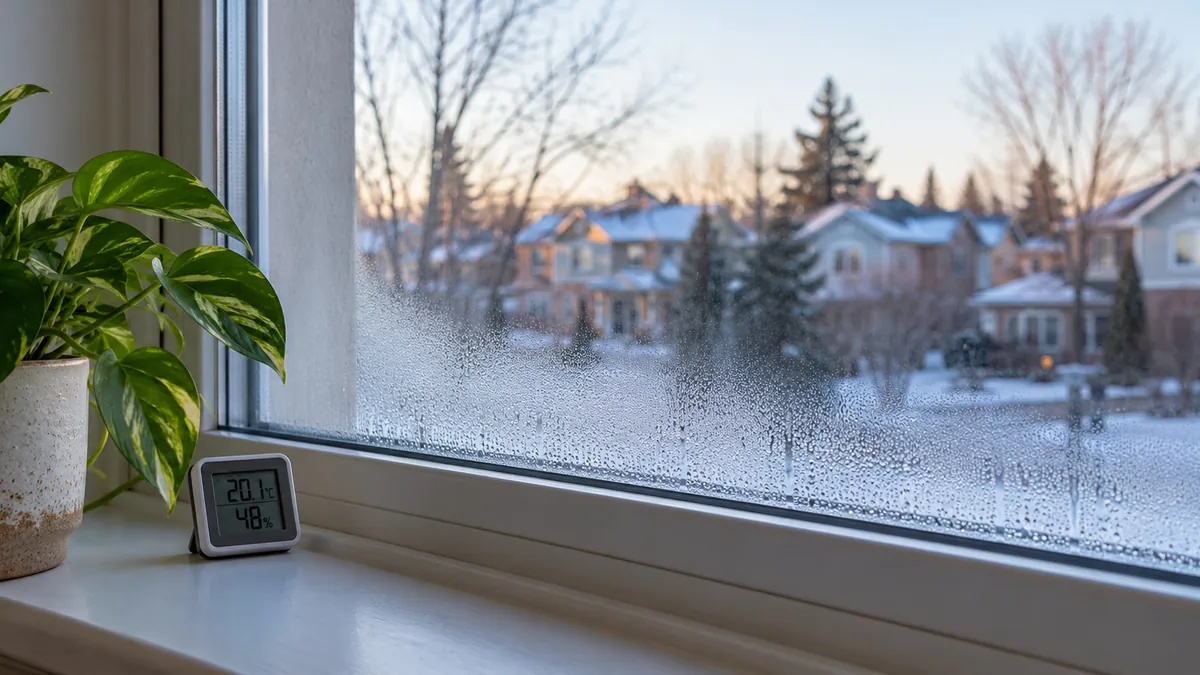
Condensation on windows is one of the most common complaints Canadian homeowners raise, especially as winter sets in. Water droplets on the glass, frost at the bottom corners, or a persistent fog can make a home feel damp and raise concerns about mold, rot, and window failure.
Not all window moisture is the same. Surface condensation is usually a humidity and ventilation issue. Fog trapped between panes is a failed sealed unit. Understanding the difference saves you from replacing windows that only need better airflow, and from ignoring windows that genuinely need repair.
This guide explains where condensation comes from, how to tell surface moisture from seal failure, and how to manage indoor humidity across the seasons. It is written for Canadian homes, where cold outdoor air, tight construction, and long heating seasons combine to make window moisture a near-universal experience.
Where Window Condensation Comes From
Condensation forms when warm, moist air meets a surface colder than the dew point. The air can no longer hold its moisture, so the water changes from vapour to liquid on the glass.
In a Canadian home, the coldest interior surfaces are usually the windows. Glass conducts heat quickly, so window panes are much colder than the walls. When indoor air touches that cold glass, moisture drops out of the air and collects on the surface.
Common sources of indoor moisture include:
- Cooking and boiling water on the stove.
- Showers and baths without adequate exhaust.
- Laundry dried indoors or a dryer venting inside.
- Dishwashers, especially when opened mid-cycle.
- Houseplants and aquariums.
- Breathing and perspiration from occupants.
- Unvented gas appliances.
- Damp basements or crawl spaces adding moisture to the air.
A family of four can add significant moisture to a home every day through normal activity. In a well-sealed modern home, that moisture has nowhere to go unless it is actively removed.
Surface Condensation vs Failed Seal
These two problems look similar but require completely different responses:
| Feature | Surface condensation | Failed sealed unit |
|---|---|---|
| Location | Room-side glass surface | Between the panes |
| Can you wipe it off | Yes | No |
| When it appears | Cold weather, high humidity, after cooking or showering | Any time, often worse in cold weather |
| Typical cause | Indoor moisture meets cold glass | Breach in the sealed edge of the glass unit |
| Primary fix | Ventilation and humidity control | Replace the sealed unit or the window |
Surface condensation is a house-wide air-quality issue. A failed seal is a single-window component issue. Treating surface condensation as a window defect leads to unnecessary replacement. Treating fog between panes as a humidity problem means the fog will never go away.
Read our guide to foggy window panes for the detailed distinction between surface moisture and seal failure.
Condensation by Room
Different rooms produce different amounts of moisture, and window condensation often concentrates where moisture is generated:
Kitchen: Cooking releases steam. A range hood that is undersized, not ducted outside, or not used during cooking lets moisture collect on nearby windows.
Bathroom: Showers and baths are intense moisture sources. A bathroom fan that runs for only a few minutes after showering is often insufficient. Windows in bathrooms fog first because the glass is cold and the air is saturated.
Bedroom: Two people sleeping in a closed room add moisture through breathing overnight. Bedroom windows often show condensation in the morning, especially in winter.
Basement: Cool basement walls and windows can cause condensation even when indoor humidity seems normal. A damp basement adds moisture to the whole house.
Laundry room: An improperly vented dryer releases large amounts of warm, moist air directly into the home.
If condensation appears only in one or two rooms, the fix is usually local ventilation or humidity control rather than window replacement.
How Cold Weather Makes It Worse
Canadian winters create ideal conditions for window condensation:
- Outdoor temperatures well below freezing make window glass very cold.
- Indoor heating keeps the air warm and able to hold moisture.
- The temperature gap between indoors and outdoors is at its largest.
- Homes are sealed tight to keep heat in, trapping moisture inside.
- The dew point on the glass is reached more easily.
A window that shows no condensation in October may stream water by January. This does not necessarily mean the window has failed. It means the conditions are testing the window's surface temperature.
Measuring and Managing Indoor Humidity
The first step in controlling condensation is knowing your indoor humidity level:
- Use a hygrometer to measure relative humidity in different rooms.
- Aim for 30 to 50 percent relative humidity in winter. Above 60 percent, condensation and mold risk rise.
- Check bedrooms, bathrooms, kitchens, and basement separately. Humidity varies by room.
If humidity is consistently high, these steps help:
- Run bathroom fans during showers and for at least 20 minutes afterward.
- Use the range hood whenever cooking, and verify it vents outside.
- Cover pots while cooking to reduce steam.
- Dry laundry outdoors or use a vented dryer.
- Run a dehumidifier in damp basements during humid months.
- Keep furniture and curtains away from exterior walls to allow airflow.
- Open windows briefly on mild days to exchange air, but not during extreme cold.
Ventilation Strategies That Work
Modern Canadian homes are built tight for energy efficiency, which means moisture stays inside unless it is mechanically removed:
- Heat recovery ventilators (HRVs) exchange stale indoor air for fresh outdoor air while recovering heat. They are the most effective long-term solution for tight homes.
- Exhaust fans in bathrooms and kitchens remove moisture at the source. They must be sized correctly and ducted to the outside, not into the attic.
- Window opening provides quick air exchange but is impractical in deep cold and can make condensation worse if outdoor air is humid.
- Dehumidifiers remove moisture directly and are useful in basements and during humid summer months.
A home without mechanical ventilation often shows condensation on every window at once. A home with good ventilation may show none, even with the same windows.
Condensation on New vs Old Windows
When considering replacement, window energy ratings can help you compare glazing performance alongside ventilation and indoor humidity.
New windows with modern glazing are warmer on the room side than old single-pane windows. That means they resist surface condensation better. However, a new window in a high-humidity room can still condense if the glass temperature drops below the dew point.
Old windows, especially single-pane units, get very cold and condense easily. Replacing them with double or triple glazing raises the interior glass temperature and reduces condensation. But new windows will not fix moisture caused by a dryer venting indoors or a bathroom fan that does not run.
When Condensation Points to a Larger Problem
Persistent or severe condensation can signal issues beyond humidity:
- Water stains or peeling paint around the window frame.
- Soft or rotted wood at the sill or jamb.
- Mold growth on walls, trim, or window coverings.
- Condensation between panes, which means the sealed unit has failed.
- A damp or musty smell that follows the seasons.
If you see water on the wall around the window rather than on the glass, the leak may be in the flashing, roof, or wall assembly, not in the window itself. Address the water source before assuming the window is at fault.
Health and Comfort Considerations
High indoor humidity affects more than windows:
- Dust mites thrive above 50 percent humidity.
- Mold and mildew grow on damp surfaces, including window frames and drywall.
- Asthma and allergy symptoms can worsen in damp conditions.
- A clammy feeling at normal temperatures often comes from excess moisture in the air.
Controlling humidity protects the home and the people in it. Window condensation is often the earliest visible sign that indoor moisture needs attention.
Seasonal Checklist
Fall:
- Clean window tracks and drainage slots.
- Check exterior sealant and flashing.
- Test bathroom and kitchen fans.
- Measure baseline indoor humidity.
- Remove and store screens before snow.
Winter:
- Run exhaust fans during and after moisture-producing activities.
- Wipe window condensation regularly so water does not run into the frame.
- Keep indoor humidity between 30 and 50 percent.
- Open blinds and curtains to allow airflow across the glass.
Spring:
- Inspect windows for water damage or rot revealed by winter condensation.
- Reinstall screens after repairs.
- Check for failed seals or fogging between panes.
- Service HRVs and dehumidifiers.
What to Photograph Before You Call
If you need a professional assessment, these photos help:
- The window showing condensation, including the frame and sill.
- Water stains or peeling paint around the opening.
- Mold or discoloration on nearby walls or trim.
- The hygrometer reading in the affected room.
- The exterior of the window, taken safely from the ground or inside.
- Any room where condensation is worst, including the door closed or open.
Note when the condensation appears: morning, after cooking, after showering, or all day. That pattern points to the source.
Frequently Asked Questions
Does condensation mean my windows are leaking?
Not usually. Surface condensation is indoor moisture on cold glass. A leak around the frame is water entering from outside and should be checked separately.
Will new windows stop condensation?
They can reduce it by keeping the interior glass warmer, but they will not eliminate condensation if indoor humidity is too high or ventilation is poor.
Is some condensation normal?
Brief condensation on very cold days is common. Persistent condensation, water running down the glass, or frost buildup indicates a humidity or ventilation issue.
Can I wipe condensation off?
Yes, and you should. Letting water sit on the sill can damage wood and finishes and encourage mold.
Does a dehumidifier help?
Yes, especially in basements and during humid weather. It removes moisture directly from the air.
Why is condensation worse in the bedroom?
Breathing overnight adds moisture to a closed room, and bedroom windows are often cooler than living areas.
Condensation Cost Expectations
Treat any figure you see online as a planning range rather than a quote. The cost of fixing condensation depends entirely on the cause.
As a general planning guide:
- Ventilation and humidity fixes: usually the lowest cost, because they involve fans, dehumidifiers, or behaviour changes rather than window work.
- Surface condensation management: minimal cost, limited to wiping sills and adjusting blinds or curtains.
- Sealed unit replacement: a moderate cost, because it involves a new glass unit, labour, and disposal.
- Full window replacement: the highest cost, because it includes a new frame, installation, and finishing.
- Wall or flashing repairs: variable, and can rise significantly if water has damaged the framing.
Addressing surface condensation early is far cheaper than repairing rot or mold later. If you are unsure whether the moisture is surface condensation or a failed seal, arrange an assessment before spending on repairs.
Working With Your Contractor on Condensation
A good contractor will:
- Confirm whether the moisture is surface condensation or fog between panes.
- Check the frame and sill for water damage before recommending a fix.
- Measure indoor humidity and ask about ventilation in the affected rooms.
- Explain whether new windows would actually solve the problem or whether humidity control is the real answer.
- Avoid replacing windows that only need better airflow.
If a contractor recommends replacing every window because of condensation without checking humidity and ventilation first, get a second opinion.
Next Steps
Most window condensation can be managed with ventilation, humidity control, and routine care. If you see water between panes, stains on the frame, or mold around the window, arrange an assessment. Windoorly can check whether the issue is the window, the installation, or the indoor environment.