Window Balances and Sash Cords: Why Your Window Wont Stay Up
A guide to window balances and sash cords, what keeps a sash in place, why windows drift down, and how to tell whether a repair or replacement is the right step.
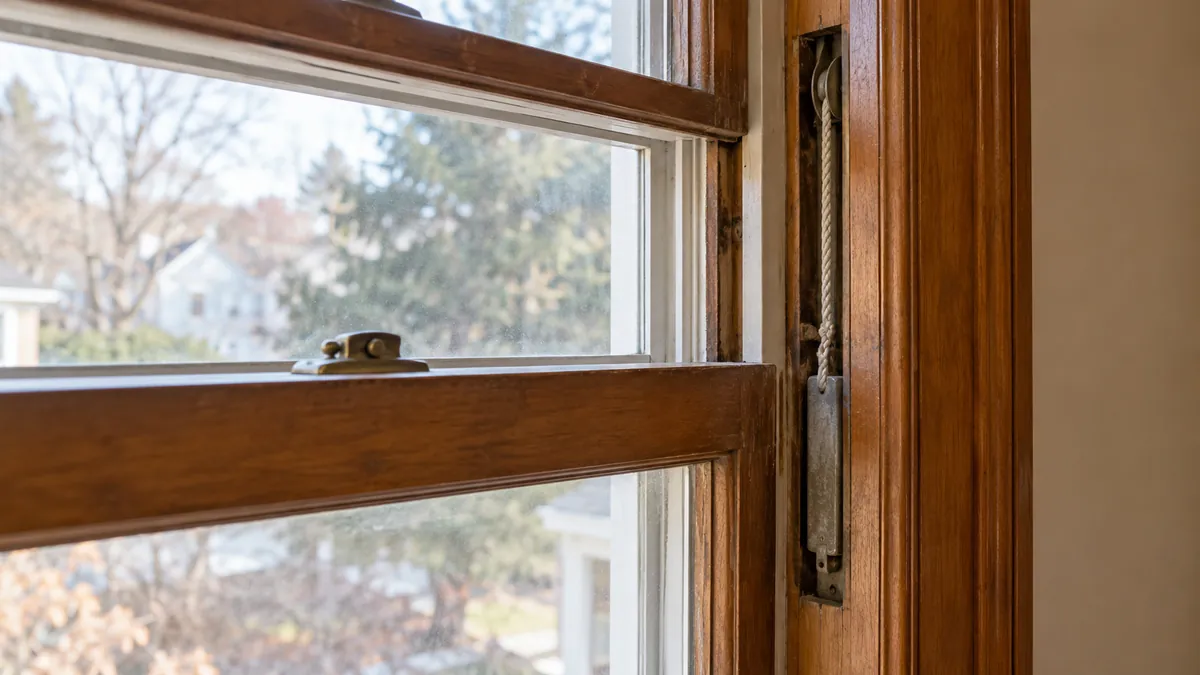
A double-hung or single-hung window that will not stay open usually has a balance or sash cord problem. The sash drifts down on its own, slams shut when you let go, or feels heavy and uneven to lift. These are signs that the mechanism holding the sash in place has failed or worn out.
This guide explains how window balances and sash cords work, the common ways they fail, what you can check safely, and when to call a professional. It is written for Canadian homes, where wooden sash windows are common in older houses and where seasonal humidity adds stress to moving parts.
How Balances Keep a Sash in Place
A window balance is the hidden hardware inside the frame that counterbalances the weight of the sash. Without it, the full weight of the glass and frame would rest on your hands every time you open the window, and gravity would pull the sash closed the moment you let go.
Common balance types include:
- Block and tackle balances: a pulley system with a spring or cord inside a plastic or metal housing, common in modern vinyl and wood windows.
- Spiral balances: a rod inside a tube with a spiral spring, found in many older aluminum and vinyl windows.
- Constant force balances: a flat spring coil that provides steady pressure across the sash travel, often used in higher-end windows.
- Sash cords and weights: a cord running over a pulley at the top of the frame, connected to a counterweight hidden inside the jamb, typical of traditional wood windows.
Each system does the same job: it offsets the sash weight so the window stays where you put it. When any part of that system breaks, stretches, or disconnects, the sash will not hold its position.
Signs Your Balance or Sash Cord Has Failed
If the sash also binds or the lock will not line up, the window operation checklist covers other possible causes.
The symptoms are usually easy to spot once you know what to look for:
- The sash drops down on its own after you open it.
- You have to hold the window up with one hand while using the other.
- One side of the sash is higher than the other when the window is open.
- The window feels much heavier than it used to.
- A sash cord looks frayed, snapped, or loose inside the jamb.
- The window makes a grinding or slipping sound when you lift it.
- The sash tilts or binds as it moves up and down.
A single failed balance often affects only one side, which is why the window can feel uneven. If both sides have failed, the window may slam shut completely.
What Causes Balance Failure
Balances fail for several reasons, and the cause affects the repair approach:
- Age and metal fatigue: springs lose tension over years of repeated use.
- Corrosion: moisture inside the frame can rust cords, pulleys, or spiral tubes.
- Humidity and swelling: Canadian seasonal changes swell wooden frames and sashes, adding friction that strains the balance.
- Broken cord or pulley: sash cords fray with age, and pulleys can seize or crack.
- Disconnected balance: the clip or shoe that attaches the balance to the sash can pop off.
- Paint buildup: layers of paint can glue the sash in place or jam the balance housing.
- Improper past repairs: a balance installed for the wrong sash weight will not hold correctly.
Sash Cord Systems in Older Windows
Traditional wood windows often use sash cords rather than modern spring balances. A cord runs from the sash, over a pulley at the top of the jamb, down to a lead or iron weight inside a weight pocket.
If the cord snaps, the weight drops to the bottom of the pocket and the sash has nothing holding it up. If the pulley seizes, the cord cannot move freely. If the weight itself has been removed during a past renovation, there is no counterbalance at all.
Repairing a sash cord system usually means accessing the weight pocket, which may require removing interior trim or part of the jamb. It is more involved than replacing a modern balance cartridge, but it preserves the original window.
Safe Checks You Can Do
Before calling a contractor, you can gather useful information without taking the window apart:
- Open the sash a few inches and let go. Does it stay, drift slowly, or fall quickly?
- Open it halfway. Does one side sit higher than the other?
- Lift and lower the sash slowly. Is the effort even on both sides?
- Look at the edges of the sash where it meets the frame. Do you see a balance housing, a spiral tube, or signs of a cord pulley?
- Check for cracked or peeling paint around the balance area that might be jamming movement.
- If the window tilts for cleaning, tilt it and inspect the bottom corners for balance shoes or clips.
Do not force a sash that will not move. Forcing a stuck sash can crack the glass, split the wood, or bend the balance beyond repair.
What Not to Do
- Do not remove a balance or sash cord without supporting the sash first.
- Do not cut or pull on a sash cord to see if it is still attached.
- Do not spray lubricant into a balance housing unless the manufacturer recommends it.
- Do not plane or sand the sash edges to make it move easier until the balance issue is fixed.
- Do not ignore a sash that will not stay up on an upper floor or above a walkway. A falling sash can break glass and injure someone below.
Window Type and Balance Implications
| Window type | Typical balance system | What usually fails |
|---|---|---|
| Modern double-hung vinyl | Block and tackle or spiral | Spring tension loss, broken shoe |
| Modern double-hung wood | Block and tackle or sash cord | Cord fraying, pulley seizure |
| Older wood double-hung | Sash cords and weights | Snapped cord, removed weight |
| Single-hung | Bottom balance only | Lower sash balance failure |
| Tilt window | Balance with tilt shoes | Tilt shoe wear, balance disconnect |
Knowing your window type helps you describe the problem accurately and helps the contractor bring the right parts.
Repair or Replace the Balance
Replacing a balance is often straightforward when the frame and sash are sound. The process usually involves:
- Removing the sash from the frame.
- Unclipping or unpinning the old balance.
- Installing a new balance matched to the sash weight and size.
- Reinstalling the sash and testing operation.
For sash cord windows, the repair may require accessing the weight pocket, replacing the cord, and rehanging the weight. This takes more time but is usually worthwhile on a sound wood window.
A balance replacement makes sense when:
- The frame is solid and square.
- The sash is not warped or rotted.
- The glass and hardware are in good condition.
- Replacement balances are available for your window model.
Full window replacement is worth considering when:
- The frame is rotted or out of square.
- Several windows in the same area have balance failures.
- The sash is warped or the wood is soft.
- The window is an older single-pane unit and you want better efficiency.
Canadian Climate Considerations
Canadian homes put extra demands on window balances:
- Winter cold makes metal springs and cords contract and become brittle.
- Summer humidity swells wooden frames, increasing friction on the balance.
- Freeze-thaw cycles can shift the frame slightly, throwing the balance out of alignment.
- Temperature swings between indoors and outdoors stress the sash and its counterweight.
A balance that works fine in mild weather may fail when the frame swells in July or contracts in January. Seasonal operation checks help you catch problems early.
What to Photograph Before You Call
Photos help a contractor identify the balance type and bring the right parts:
- The full window from inside.
- The sash edges where the balance housing would be visible.
- The bottom corners of the sash with the window tilted, if applicable.
- Any visible balance tubes, cords, or pulley areas.
- The frame corners and sill for signs of rot or movement.
- A tape measure across the sash width and height.
Note whether the problem affects one sash or both, and whether it started suddenly or gradually.
Contractor Checklist
Before booking work, confirm:
- The balance type used in your window.
- Whether replacement balances are available for your model.
- Whether the quote includes sash removal and reinstallation.
- Whether the sash weight has been measured for the correct balance strength.
- The warranty on parts and labour.
- Whether any frame or sill repair is needed before the new balance is installed.
A contractor who identifies the balance type before quoting is more likely to fix the problem the first time.
Maintenance to Keep Balances Working
- Open and close every operable window seasonally to keep mechanisms moving.
- Keep tracks and balance housings free of dust and debris.
- Avoid slamming sashes shut, which shocks the balance system.
- Address sticking or binding early before it strains the balance.
- Check for new paint buildup around balance areas after repainting.
- Fix water leaks around the frame to prevent corrosion of balance components.
Frequently Asked Questions
Can I replace just one balance?
Yes, but if one side has failed the other is often close behind. Replacing both at once keeps operation even and avoids a second visit soon after.
Why does my window stay up in summer but not in winter?
Wooden frames and sashes change dimension with humidity and temperature. A marginal balance may hold in one season and fail in another as friction changes.
How long do window balances last?
Many last 10 to 20 years, depending on use, quality, and climate. Heavy daily use and coastal moisture shorten life.
Can I fix a snapped sash cord myself?
Only if you are comfortable accessing the weight pocket and supporting the sash safely. It is often easier for a professional because of the trim and jamb work involved.
Will a new balance make my window easier to open?
Yes, if the only problem is the balance. If the frame is swollen or the sash is warped, those issues need separate attention.
Does a failed balance mean I need new windows?
Not usually. A sound frame and sash with a failed balance is a strong repair candidate.
Balance Repair Cost Expectations
Treat any figure you see online as a planning range rather than a quote. The actual price depends on the balance type, the sash weight, the window size, and whether the sash must be removed to access the hardware.
As a general planning guide:
- Balance hardware only: usually the lowest-cost part of the job, because the part itself is modest.
- Service call and diagnosis: often a separate fee, which some contractors credit toward the repair.
- Sash removal and reinstallation: adds labour, especially on upper floors or heavy wood windows.
- Frame or sill repair: variable, and can rise significantly if hidden rot is found once the sash is out.
- Multiple windows: the per-window cost may drop when several balances are done in one visit, because setup and travel are shared.
Ask for a written quote that separates parts, labour, and any frame work. A contractor who quotes a single lump sum without diagnosing the balance type first may be guessing.
Working With Your Contractor on Balances
A good contractor will:
- Identify the balance type before suggesting a price.
- Measure the sash weight to select the correct balance strength.
- Test the window after installation to confirm it stays open at multiple heights.
- Explain whether one or both balances should be replaced.
- Note any frame or sash issues that could cause the new balance to fail prematurely.
If the contractor recommends replacing the whole window for a balance problem on a sound frame, get a second opinion. A balance replacement is often the more economical and honest fix.
Next Steps
Windoorly can assess whether your window balances can be repaired or whether replacement is more practical. If your window will not stay up, or if one side is higher than the other, send us photos of the sash and frame and we will explain the likely next step.