Why Is My Exterior Door Drafty? Fixes That Work
Find the source of a draft around an exterior door, from worn weatherstripping and sweeps to frame gaps, and learn when repair is enough.
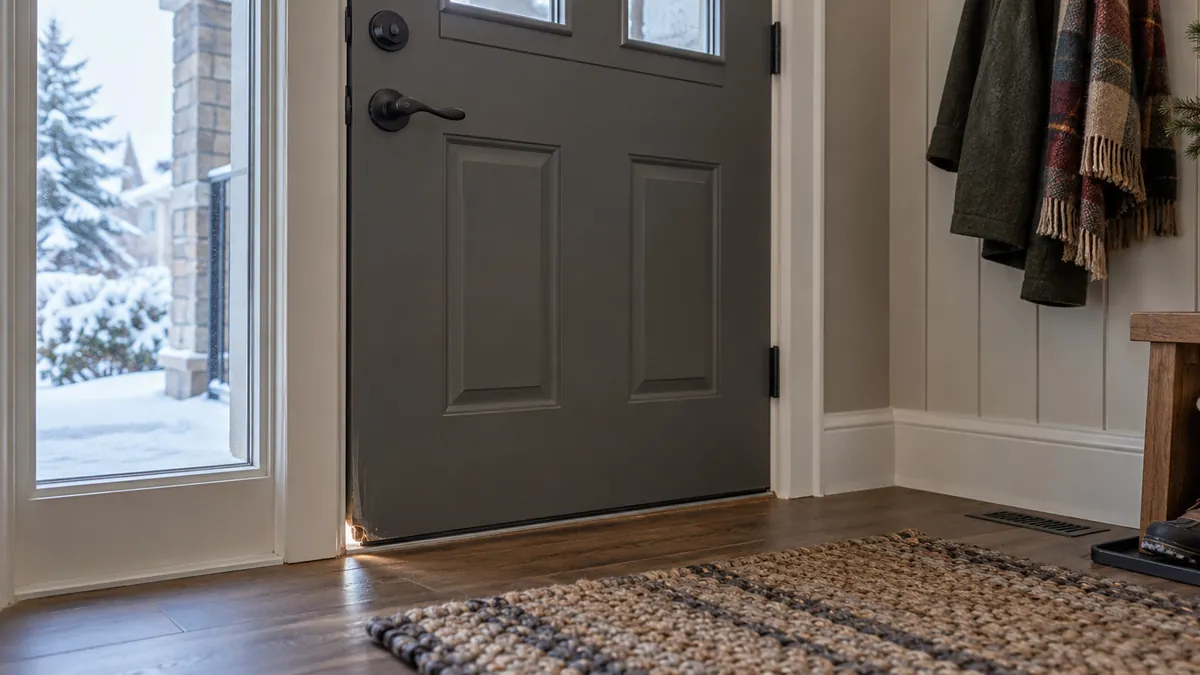
A draft around an exterior door usually comes from a failed seal, a gap at the threshold or a door that no longer fits its frame. The fix may be as simple as replacing weatherstripping or adjusting a sweep. It may also point to a door or frame that has moved, warped or rotted.
Diagnosing the source first prevents you from replacing a door that only needs a seal, or repeatedly adjusting a door that has a larger problem.
Find the Leak
On a cold or windy day:
- Close and lock the door.
- Run your hand slowly around the perimeter, the threshold and the lock area.
- Hold a tissue or a thin stream of smoke near the edges. Keep it away from flammable materials.
- Check the bottom corners and the hinge side, not just the latch side.
- Look for daylight around the frame.
Note where the air is strongest. A draft at the bottom is often a sweep or threshold issue. A draft along the side may be weatherstripping, a warped slab or a frame gap.
Repeat the check with the door locked and unlocked, and with an exhaust fan running in the kitchen or bathroom. A fan can depressurize the house and make a small leak obvious. If the draft appears only when the fan runs, the door may be the weakest seal in an otherwise normal pressure balance.
How Air Moves Around a Door
An exterior door has several sealing points: the weatherstrip against the stop, the sweep at the bottom, the threshold, the lock area and the sealant between the frame and the wall. Air takes the easiest path, so a small failure at any one point can feel like a large draft.
There are two different problems to separate. Air infiltration is outside air moving in through a gap. Warm indoor air can also escape, which feels like a draft because it cools as it moves. Both matter for comfort and heating, but the repair may differ.
A door also needs to shed water. A seal that blocks air but traps water can cause rot, which is worse than a draft. When you repair a seal, check that the threshold and drainage path still work.
Cause 1: Worn Weatherstripping
Weatherstripping seals the gap between the door and the frame. It can flatten, crack, tear or pull loose.
Signs include:
- Visible gaps or flattened strips.
- A door that rattles or feels loose.
- Drafts along the latch or hinge side.
- Water staining or dirt tracks at the seal.
- The door no longer closes with a slight compression against the stop.
Replacing the weatherstrip is often inexpensive. The correct profile depends on the door and frame. If the door is not aligned, new weatherstripping may wear quickly or fail to seal. A door that rubs the seal on one side will compress it there and leave a gap on the other.
Before buying a replacement, look at the existing profile: foam, bulb, blade, magnetic or brush. Matching the profile and the groove is more important than choosing the thickest strip. A strip that is too thick can make the door hard to close and strain the hinges.
Cause 2: Worn Door Sweep or Threshold
The bottom of an exterior door takes the most wear.
Check:
- The door sweep for tears, stiffness or missing sections.
- The threshold for looseness, cracks or a failed seal.
- The gap under the door.
- Water tracks or staining at the threshold.
- Whether the door drags on the threshold.
A new sweep or an adjustable threshold may solve the draft. If the door has dropped, fix the hinge alignment first. A sweep that is pressed too tightly against the threshold can make the door hard to open and wear out quickly.
Some thresholds have adjustable screws that raise or lower the seal. Adjust them in small steps and test the door after each change. If the threshold is loose, tilted or sitting on soft wood, tightening the seal will not fix the underlying movement.
Cause 3: Gaps Around the Frame
Air can enter between the frame and the wall, especially if the exterior sealant or interior trim has opened.
Look for:
- Cracked exterior caulking.
- Gaps under the interior trim.
- Loose or missing trim.
- Water stains or soft wood.
- Cold spots on the wall beside the door.
Small gaps may be sealed with an appropriate exterior sealant. Larger gaps or wet framing need a proper repair. Do not trap moisture behind new caulk. Clean the joint, remove loose material and confirm the area is dry before sealing.
If the gap is wide enough to see daylight or feel a steady flow, the frame may have separated from the wall. That is a job for a professional, because the repair may involve the weather barrier and structural fixings, not just a bead of sealant.
Cause 4: A Warped or Shrunken Door
A door that has warped will not sit evenly against the weatherstripping.
Signs include:
- A gap that changes from top to bottom.
- A door that rubs at one corner.
- Daylight visible along one edge.
- A slab that feels soft or hollow.
- Cracks or separation in the door surface.
A minor adjustment may help, but a badly warped exterior door often needs replacement to restore a reliable seal. See door repair vs replacement before deciding.
Shrinkage is different from warping. In dry winter air, a timber door can shrink slightly, leaving a gap at the latch side. That gap often closes in summer. If the door has moved seasonally for years without water damage, a seasonal adjustment or a slightly deeper seal may be enough.
Cause 5: Locks and Hardware
A door that is not fully latched cannot seal. Check:
- Whether the latch engages easily.
- Whether the deadbolt lines up.
- Whether the door needs to be lifted to lock.
- Whether the handle or lock is loose.
- Whether the strike plate allows the door to sit tight against the seal.
A misaligned lock is often a sign that the door has dropped. Fix the alignment rather than enlarging the strike plate. A door that is held slightly open by a misaligned strike will leak air even if the weatherstrip is new.
Cause 6: The Wall or Another Opening
Sometimes the door is not the source. Air can come from:
- Gaps around electrical outlets.
- Missing insulation in the wall.
- A basement or crawl-space leak.
- An exterior penetration nearby.
- A range hood or bathroom fan pulling air through the house.
If the draft continues when the door is sealed with temporary plastic, investigate the surrounding wall. A thermal camera or a professional assessment can find the path without guesswork.
Canadian Weather and Humidity
Canadian exterior doors face wind-driven rain, snow, hard cold and humid summers. Each puts pressure on a different part of the assembly.
Wind-driven rain tests the exterior sealant, the threshold and the weatherstrip. A seal that looks intact can still let water in when rain is driven at an angle. In winter, repeated freeze-thaw cycles open small cracks and can lift sealant. Cold outdoor air also makes any indoor leak feel stronger.
Indoor humidity matters too. In a tightly sealed house, a failed door seal can let moist indoor air into the frame cavity, where it may condense and cause rot. That is why a draft is worth fixing even if the door feels warm; the moisture risk can be greater than the heating cost.
Coastal British Columbia, the Prairies and Atlantic Canada experience these factors differently, but the principle is the same: the door must shed water outward and resist air movement in both directions. A repair that only blocks air but traps water is not a good repair.
Entry, Patio and Interior Doors
Drafts are most common on entry doors, because they are used heavily and face the weather directly. Entry doors usually have a threshold, a sweep and a perimeter seal, and they carry locks and deadbolts that must align for the door to close tightly. Our entry doors overview covers the main types and hardware.
Patio doors have different sealing points. Sliding doors rely on weatherstrip and a track drainage system, and a draft often comes from a worn seal, a misadjusted roller or a blocked drain. Our sliding patio doors page covers the hardware, and our guide to sliding patio doors that are hard to open explains track and roller problems. Hinged patio doors behave more like entry doors, with hinges, a sweep and a perimeter seal.
Interior doors do not usually produce outdoor drafts, but they can let cold air move between rooms. A draft from an interior door often points to pressure differences, a missing seal or a gap at the floor. It is rarely a weather-seal problem.
Security and Sealing
A draft repair should not weaken security. Replacing weatherstrip is harmless, but moving a strike plate, shortening a deadbolt or loosening a lock to make the door sit tighter can reduce security.
Check that the door still latches and locks without lifting after any seal or threshold adjustment. A thicker seal can hold the door away from the strike, so the lock may need a small alignment adjustment rather than force. If the frame around the lock is soft or split, repair the frame or consider replacement; a seal alone will not restore strength.
Fire-Rated Doors
A fire-rated door in an apartment, rental, commercial building or garage-to-house wall must not be altered to stop a draft. Its seals, closer, hinges and frame are part of a tested assembly. Adding foam, trimming the slab or changing the hardware can void the rating.
If a fire door is draughty or will not latch, report it to the property manager or a qualified contractor. The correct fix preserves the door's intended performance and meets building requirements. Comfort comes second to life safety.
Rental Considerations
In a rental, report the draft in writing and include photos of the gap, the seal and the threshold. A draughty exterior door affects heating and can lead to moisture problems, so it is a legitimate maintenance request rather than a cosmetic one.
Do not seal the door shut or make structural changes without permission. Temporary measures such as a draught excluder can help while you wait, but they are not a repair. If the door is fire-rated, do not modify it at all.
Repairs Worth Trying First
Depending on the cause:
- Replace worn weatherstripping with a matching profile.
- Replace a torn door sweep.
- Adjust or replace the threshold.
- Tighten or adjust hinges so the door sits squarely.
- Re-caulk small exterior gaps after cleaning and drying.
- Replace worn locks or handles.
- Add a storm door where appropriate and permitted.
Do not seal an exterior door shut. It is an exit and may be needed in an emergency. Keep the door operable from the inside at all times.
Safe Adjustments and When to Stop
Reasonable homeowner tasks include replacing weatherstrip and a sweep, cleaning and adjusting an adjustable threshold within its range, tightening loose hinge screws and sealing a small dry exterior gap.
Stop and call a professional if the frame is soft, the door is warped, water is entering the wall, the lock will not engage securely, the door is fire-rated, or the draft returns after a repair. Also stop if the repair requires removing the door, working at height or disturbing the exterior weather barrier.
A draft that persists after the obvious seals are replaced usually means the diagnosis was incomplete. Continuing to add sealant or thicker strips can trap moisture and make the door harder to operate.
What to Photograph
- The full door from inside and outside.
- The gap at the top, sides and bottom, with a ruler for scale.
- The weatherstrip profile, close up.
- The threshold and sweep, including any water staining.
- The frame edges and exterior sealant line.
- The lock and strike plate.
- Any soft timber, cracks or delamination.
Take photos in daylight and include one wide shot.
Compare Contractor Quotes
Ask:
- What is the diagnosed source of the draft?
- Will the door be adjusted, repaired or replaced?
- Are weatherstrip, sweep and threshold included?
- Is the frame or wall being sealed, and how?
- Is the work guaranteed?
- What happens if rot is found behind the frame?
A quote that only says "replace weatherstrip" may not address a dropped door. A quote that recommends a new door should explain why the existing slab and frame cannot be repaired.
Maintenance
- Inspect seals and sweep each autumn.
- Clean the threshold and keep drainage slots open.
- Check exterior sealant before winter and repair small cracks.
- Tighten hinge screws annually without over-tightening.
- Keep the lock aligned so the door closes fully.
- Watch for daylight, water stains or new rub marks.
- Replace hardened or torn seals rather than adding extra strips.
Frequently Asked Questions
Why is my door drafty only on windy days?
Wind increases pressure on the seal. A small gap that is unnoticeable in calm weather can become obvious in wind. Check the weatherstrip, sweep and frame sealant.
Can I just add foam weatherstrip?
Only if the existing profile is worn and the door is aligned. Adding a thicker strip to a misaligned door can make it hard to close and may not seal the gap.
Should I feel air around the lock?
A small amount of movement is possible, but a steady draft suggests a missing seal, a loose lock or a door that is not fully latched.
Is a drafty door a moisture problem?
It can be. Air movement can carry moisture into the frame cavity, where it may condense. Fix the seal and check for soft timber or staining.
Do I need a new door?
Not always. Seals, sweeps, thresholds and hinge alignment solve many drafts. Replacement is more likely when the slab is warped, the frame is rotted or water has entered the wall.
Can I repair a rental door myself?
Report it to the landlord first. Do not modify a fire-rated door, and do not seal an exit shut.
When to Replace the Door
Replacement is worth considering when:
- The slab is warped, cracked or delaminating.
- The frame or sill is rotted.
- Water is entering the wall.
- The door has been repaired repeatedly.
- The door no longer provides the security or insulation you need.
- Parts are unavailable.
A new door can improve sealing and security, but only if it is installed correctly. The opening, threshold and flashing details matter as much as the door itself. If the door is sticking as well as draughty, read our guide to doors that stick, drag or will not latch before arranging a visit.
Windoorly can assess the seal and alignment and discuss the appropriate work. Request a quote with details of the draft.